Peace at Last – A Career Odyssey

Barbara
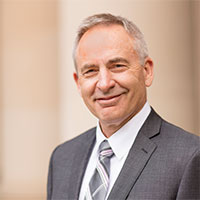
Barbara Wolf Shousha, UNHS Director

“When your daily activities are in concert with your highest priorities, you have a credible claim to inner peace.” —Hyrum Smith, co-founder Franklin Covey

My first research report was for my middle school science class. I cannot remember the actual topic but I remember visiting the main public library (life before the internet for you young ones!) where I was awed by the reference librarians and the abundant amount of material. I felt thrilled to read, make notes and cross-reference!

As an adult, I studied educational theory and wrote a thesis on educational philosophy. I spent hours alone in school archives and I LOVED it!  I remember when the ideas started to come together so fast I could barely record them. I would read through documents for hours, my only human interaction being brief exchanges with the archivist, “I’d like box two, folder six of this collection please.” I was incredibly happy and filled with energy.

In my career, I worked as an instructional designer for corporations and felt that same thrill taking apart complex information and re-structuring it for learners. It didn’t matter what the content was, I was on a mission to make it clear and useful.

As much as I loved some of the challenges of my professional life, my career just felt “off” sometimes. My academic interests were abstract and idea driven and my corporate career felt too bottom-line and pragmatic. Finally, when my last corporate job ended, I resolved to find an environment that would be a good fit for me—that was when I joined the University. At last, my academic interests, my work life and my existential nerdiness are in congruence and it feels terrific!

This week I was in a meeting listening to faculty and instructional designers discuss changes to a Biology grading rubric. As they talked, everyone in the room grew more and more excited, “Yes! That will definitely help the learner!” and “This will give the student confidence to take on the more difficult concepts!” I watched them in real-time applying Bloom’s Taxonomy in the service of others and I smiled. These are my people and I am free to let my nerd light shine.

So I implore you to take note of your everyday activities—whether in work or academics—and fit these with your highest priorities and passions in life. You will be amazed at the amount of energy and peace you will experience when your daily work is aligned with what you value most.    
The Power of One

Ray
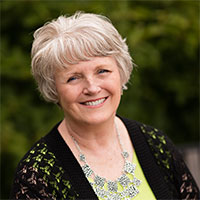
Ray Henning, UNHS Academic Adviser

Cancer does not play fair.

Recently, I had the privilege of attending the Nebraska Cattlemen’s Ball. This event is a big fundraiser for cancer research in Nebraska. Many accounts were told of families who have lost loved ones, or have friends or family members who are currently battling some type cancer.

My wife, Marcia, was one of the people who shared her story.  She was diagnosed with stage IV mantle cell lymphoma four years ago and after many rounds of chemo and a stem cell transplant (her total treatment took about one year) she is now a survivor. One of the points she noted in her remarks was from a card she received which had this saying that became very important to her:

“Cancer is a villain and it does not play fair, but it can’t take your spirit and it can’t silence prayer.”

Immediately after the Cattlemen’s Ball, she received many words of appreciation and encouragement for her willingness to be vulnerable with her cancer journey.

What makes this empowering event possible are the hundreds of volunteers. Because of their hard work, vital money for cancer research isn’t the only thing being raised—those who are affected by cancer can have a carefree night to lift their spirits and faith that one day they or their loved ones will be cancer free.

Volunteering comes in many forms. From picking up trash on the side of the road to serving dinners at a local homeless shelter, volunteering is any act that provides a service for another. More importantly, this service is done for the benefit of someone else and even the smallest things can make another smile. Seeing a clean road might make a commuter smile on their way to work, while a full stomach might empower someone who may be down on their luck.

With that in mind, my challenge to you is to volunteer for something that is important to you!

American author, Edward Everett Hale once said, “I am only one, but I am one.  I cannot do everything but I can do something. And I will not let what I cannot do interfere with what I can do”.

The power of one can make a difference. Make a difference for someone today!

Making the Connection

Hugh
High McDermott, UNHS Principal

I’ve worked in academics for many years, and I’ve always been fascinated with how teachers and students make the “connection” with each other.

From my observations successful classroom connections had the following commonalities:

  • The student was more focused and ready to learn when he/she came to learn.
  • Teachers kept the courses academically challenging.
  • The classroom environment was free from major disruptions

Both teachers and students had to make this happen—but how?

A publication from The National Middle School Association published an article called, “Classroom Connections—Linking National Middle School Association to Middle Level Classrooms Around the World” provides a few tips as to what classroom and online teachers can do to make these connections.

  • Take action. A welcoming room supports risk-taking, safety and academic success. Online teachers must use their “voice” through their response/feedback comments to establish this trust and safe environment for their students. Tone and attitude can be sensed by the words we use and how we use them.
  • Greet students into your classroom by meeting them at the door. A great opportunity to talk with students one-on-one to acknowledge some previous good work you witnessed from them or to remind them of your expectations in the class if need be. For online teachers, using a welcome assignment to let students introduce themselves and responding.
  • Keep in mind that you are always a role model. Whether you are there physically or mentally, students can and will model positive behavior when they experience it from you. They also know when you are being insincere. The choice of words that online teachers use is critical in creating and keeping a positive relationship with students. Look for ways to complement students, yet get your point across for encouraging improvement on course work.
  • Being a good disciplinarian does not mean that students are scared of you. It has to do with your understanding of students. Teachers with positive connections have a very good understanding of the developmental, social, emotional and intellectual changes students are going through. Online teachers must be consistent in their grading, which gives students a sense of fairness in their work.
  • Sometimes you have to revert to being one of “them.” Keep informed about the latest fads, fashions and slang that students use and ask students about their interests and hobbies earn respect from them. Online teachers are masters at picking up on the vibes and clues that students display for them in their submitted written work. Use these clues to extend the conversation with students.

Making connections online is different, but it’s possible and necessary.

With that connection, both teachers and students accomplish the common goal of learning, and all are richer for the experience.


Classroom Connections-Linking National Middle School Association to Middle Level Classrooms Around the World. (2000). The National Middle School Association, 2(4).

Leadership Lessons from Sandhill Cranes

Debby
Debby Bartz, UNHS Academic Adviser

Every year, I have the most amazing journeys between mid-February and early April.  I travel I-80 weekly and witness the wild migrating cranes, flocking to Nebraska. An estimated 90% of the world’s Sandhill cranes visit the Midwest along the Nebraska Platte River. They arrive during the heart of the winter months and huddle like a team to stay warm.

In mid-February, the skies are seasoned with gliding cranes, necks outstretched as they visualize the next habitual destination. Every year I watch them glide with alignment, flying in a V or J formation, using extended legs and wings for a gentle landing in the fields. Cranes rest, beef up, and gain energy while visiting Nebraska.

In the fields, cranes communicate with a chorus of many purposeful cries; moans, hissing, snoring and goose-like honks. They leap, run, and dance as they probe for food in the fields and river beds: rodents, snakes, snails, frogs, fish, insects, berries and plants. Twenty-nine days along the Platte adds about a pound of fat to help with the remaining migrations and initiate nesting.

In early April, the cranes leap up like small jets taking off in a cornfield runway. They continue their journey to find warmer weather. The crane leaders and the followers team together whether they are in the fields or skies.

While they are beautiful, I think they also demonstrate important lessons for leaders.

  • Flock as leaders and followers.
  • Be instinctive and visionary for basic and futuristic needs
  • Communicate with purpose
  • Be habitually goal oriented
  • Choose resiliency and know how to survive the toughest of time
  • Foster an environment for future generations flourish

There is always something we can learn from observing nature and its interesting inhabitants.

Take the time to slow down and discover what is out in the world beyond your screen—you may be surprised by the things you can learn.

“Luck of the Irish” To You!

Barbara
Barbara Wolf Shousha, UNHS Director

St. Patrick’s Day is an annual celebration on March 17. What began as a commemoration of the patron saint of Ireland has become a fun-filled celebration of all things Irish.

Not Irish? It does not matter!

At celebrations throughout the world, you will be informed that everyone is Irish on St. Patrick’s Day! You will see green clothing, green hair and green shamrocks. The city of Chicago even dyes the river green. You will hear St. Patrick’s Day expressions such as “Erin Go Bragh,” “Kiss the Blarney Stone” and my personal favorite “Luck of the Irish to You!”

“Luck of the Irish!” I love this expression because for years I misunderstood it. I believed it meant something like extreme good fortune. But an Irish-American friend explained that it really encompasses the sense of luck that you make yourself through your own positive outlook and determination. I liked that meaning so much better!

While I enjoy the idea of luck—wishes on a falling star, crossing my fingers—I believe in being positive and being prepared. Whether facing an exam, hoping for an opportunity or approaching a challenge in your life, it’s fun to make a wish, but you are more likely to find the luck you need when you put forth effort and have a positive attitude.

So when I wish you the “Luck of the Irish,” I really wish you the happiness and good fortune that comes from knowing that you have prepared yourself for the good things you want to come your way.