
Get Back to the Fundamentals!

Ray
Ray Henning, UNHS Academic Adviser

Fundamentals are the basic skills, techniques, etc. that serve as the foundation of any system. Being fundamentally sound is an essential if you want to be successful at something.

Throughout my years of coaching football, the team that was the most successful was usually the team that did the best in the basic fundamentals of blocking and tackling. Most football coaches plan to spend a significant part of their practice time developing or enhancing these essential skills with their players. If you are not fundamentally sound at blocking and tackling in football, you are going to struggle.

How are you in the basic fundamentals of being a good student?

Although this is not an exhaustive list, here are three standard fundamentals that can help lead you to academic success:

  1. A regular study schedule or routine
  2. A study environment that has minimal distractions
  3. Completing all required homework and assigned readings

Just as there are many additional skills in football besides blocking and tackling (i.e. passing the ball, catching the ball, rushing the passer, causing turnovers, etc.) there are also many other important skills in your development as a student: writing, reading and test taking to name a few.

After you set the foundation with the basic fundamentals, you can start working on these additional skills.

What academic fundamentals do you need to work on to help you be the best student you can be?

A Cheer For Cheerful Leaders

Debby
Debby Bartz, UNHS Academic Advisor

Two bits, four bits, six bits, a dollar—all for UNHS, stand up and holler!

This was a cheer my pep club pals and I exuberantly shouted before every sporting event in high school. We were excited and loud for the upcoming competition, and the cheerleaders led us in motivating the sporting teams.

Today, I treasure the cheerful leadership for the UNHS team. As years have seasoned me, I have come to truly value what I call a “cheerful” leader. These leaders have great qualities.

  • They have a spirit of kindness, providing joyful moments straight from the heart. It may catch you by surprise!
  • They find goodness in all aspects of living using the heart, head and hands to share cheerfulness.
  • They spread joy individually and within groups.
  • They have purpose, love learning and live every day to the fullest.
  • They network through kindness, helpfulness, happiness and positive vibes.
  • They allow fellow learners, workers, family and friends the freedom to perform to the best of their abilities and value individual strengths.

The University of Nebraska High School is lucky to have a cheerful leader in Barbara Shousha. Barbara encourages everyone to perform their best and values the challenge that each week brings. She overflows with all the characteristics of cheerful leadership.

What does being a cheerful leader mean to you?
What can you do this week to become a cheerful leader?

What Is Your Game Plan?

Ray
Ray Henning, UNHS Academic Adviser


Sports have long been an integral part of my life both as an athlete and coach, and I feel the lessons learned in athletics are similar to academics. For example, in athletic competition one of most important components to victory is having a game plan.

Most coaches develop game plans based on several factors including but not limited to:

  • The ability of his or her players
  • Opportunities for success against an opponent

You may have heard the “coach speak” phrases:

  • “Stick with the game plan” if the team is doing well or just needs to perform better
  • “Adjust the game plan” if changes are needed in order to win
E04-Sideline
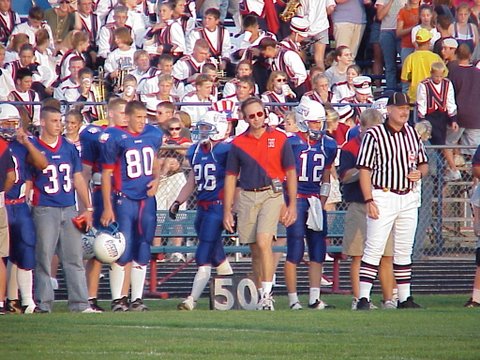
Mr. Henning coached football for 30 years at a local high school in Nebraska.

Having a game plan for your academic success is important as well, and right now is a great time of year to reassess the plan you are working on.

Perhaps you can just “stick with your plan” because you are earning the grades you desire. However, some of you may need to “adjust your game plan” because you are not experiencing the results you want or need to reach your goals.

Here are my three suggestions for adjusting your academic game plan:

  1. Believe you can do it—self-confidence is key

  2. Work hard—nothing can take the place of effort

  3. Get help if you need it—be sure to use the resources available to you!

So now I have to ask—how is your academic “game plan” working for you?  Do you need to “stick with it” or make some “adjustments”? What adjustments do you think you need to make? Please comment below.